
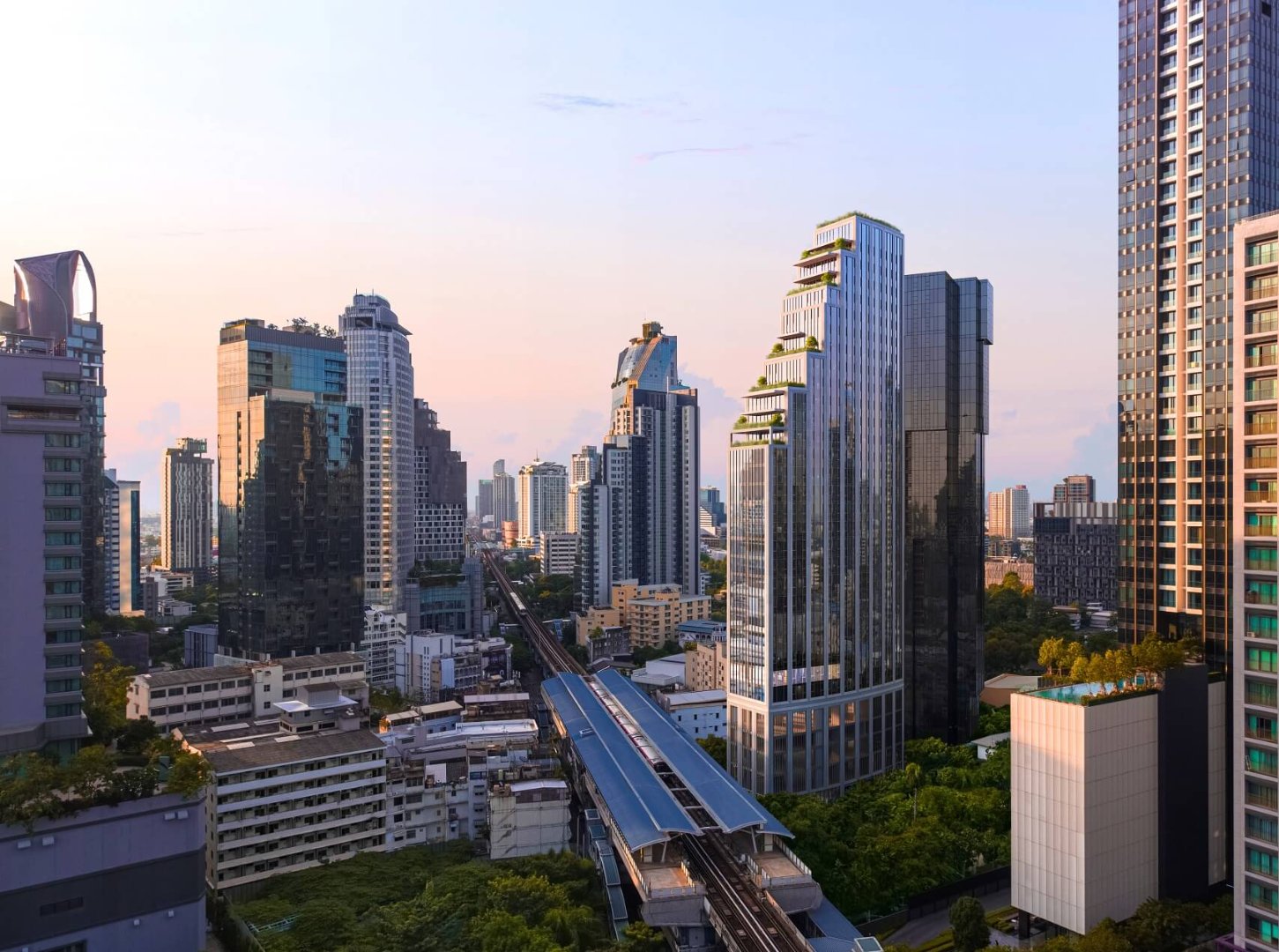
Bangkok continues to attract foreign property investors at record levels. With world-class infrastructure, strong rental yields, and a comparatively accessible foreign ownership framework, it is one of the most compelling real estate markets in Southeast Asia. But for first-time buyers, the process raises a lot of questions. Here are the ten we hear most often.
1. Can foreigners actually own property in Thailand?
Yes — with one key distinction. Foreigners cannot own land in Thailand, but they can own a condominium unit outright on a freehold basis, registered directly in their name at the Land Department. This is a genuine, title-deed ownership (known as a Chanote title) equivalent to what a Thai national holds. There is no lease, no nominee structure, and no intermediary required.
Land-based properties such as houses and villas are a different matter. Foreigners typically acquire these via long-term lease (up to 30 years, renewable), a Thai company structure, or by purchasing in a spouse's name. For most foreign investors, condominiums are the preferred and most straightforward route.
2. What is the 49% foreign freehold quota?
Thai condominium law limits foreign freehold ownership to a maximum of 49% of the total floor area of any single condominium building. The remaining 51% must be held by Thai nationals. This quota applies per building, not per development.
What this means in practice: when you buy a unit in a building where the foreign quota is already at or near 49%, you cannot purchase in foreign name. You would need to wait for an existing foreign-owned unit to come back to market, or explore the Thai quota options. We verify quota status on every building we recommend before any enquiry is made.
3. What is the process for buying a new development off-plan?
The typical process for buying a new Bangkok development looks like this:
- Reservation: A reservation deposit (usually ฿50,000 to ฿200,000) secures your chosen unit and locks in the price.
- Sales and Purchase Agreement: Within 30 days, you sign the SPA and pay an initial deposit of 10–15% of the purchase price.
- Construction payments: Progress payments of 5–10% tied to construction milestones.
- Final transfer: The balance (usually 70–80%) is paid at the Land Department on the day of title transfer.
Off-plan timelines typically range from 18 months to 4 years depending on the project stage at the time of purchase.
4. Do I need to be in Thailand to complete the purchase?
Not necessarily. The reservation and SPA stages can be handled remotely — by email, video call, and international bank transfer. For the final Land Department transfer, you have two options: attend in person, or grant a Power of Attorney (POA) to a lawyer or trusted representative who acts on your behalf.
Many of our international clients complete the entire purchase remotely and only travel to Bangkok to collect their keys. We work with experienced bilingual property lawyers who specialise in foreign buyer transactions and can handle the POA process smoothly.
5. How do I transfer money to Thailand legally?
To register foreign freehold ownership, the Land Department requires proof that the purchase funds originated from abroad. This proof comes in the form of a Foreign Exchange Transaction (FET) form — also known as a Thor.Tor.3 form — issued by your receiving Thai bank.
Transfer the funds from your overseas bank account in a foreign currency (USD, GBP, EUR, SGD, AUD, etc.) to your Thai bank account. The Thai bank converts it to Baht and issues the FET form. Always ensure the bank records the purpose as purchase of condominium, and keep every FET form — you will need them at transfer.
6. What taxes and fees will I pay at transfer?
- Transfer Fee: 2% of the appraised value. Typically split 50/50 between buyer and seller.
- Specific Business Tax (SBT): 3.3% of the sale price or appraised value (whichever is higher). Applies when the seller has owned for less than 5 years.
- Stamp Duty: 0.5%, only payable if SBT is not applicable.
- Withholding Tax: Paid by the seller, based on appraised value and length of ownership.
For new developer sales, developers frequently absorb the transfer fee and SBT as a promotional incentive. Use our Property Transfer Tax Calculator for a personalised breakdown.
7. Can I rent out my condo after purchase?
Yes. As the registered freehold owner you are free to rent out your unit. Long-term rentals of 12 months or more are entirely straightforward. Bangkok's prime areas — Thonglor, Ekkamai, Sukhumvit, Ari — consistently achieve gross rental yields of 4–6% per annum. Use our Rental Yield Calculator to model returns on any unit.
8. Is Bangkok property a good investment?
- Infrastructure: Ongoing BTS and MRT expansion drives appreciation in newly connected areas.
- Rental demand: Bangkok's large expat community and digital nomad population create consistent rental demand.
- Developer quality: Listed developers like AP Thai, SC Asset, Noble, and MQDC build to high specifications.
- Entry prices: Compared to Singapore, Hong Kong, or London, Bangkok offers exceptional value per square metre.
9. What should I look for in a Bangkok developer?
- Track record: How many completed projects do they have? Have buyers received their titles on time?
- Listed status: SET-listed developers are subject to financial disclosure requirements.
- Management company: Post-completion building management directly affects rental yields and resale value.
- Sinking fund and maintenance fees: Understand ongoing costs before committing.
10. What is the Thailand Privilege Card and is it worth it?
The Thailand Privilege Card (formerly Thailand Elite Visa) is a long-term residency programme granting a renewable 5 or 20-year visa with multiple re-entries. Benefits include dedicated immigration concierge, airport fast-track, and hospitality privileges. Membership starts at ฿900,000 for the 5-year tier. For investors who plan to spend significant time in Thailand, it is worth serious consideration alongside the purchase.
Have a question not answered here? Our team specialises in guiding international buyers through the Bangkok market from first enquiry to title transfer. Get in touch — we are happy to help.