
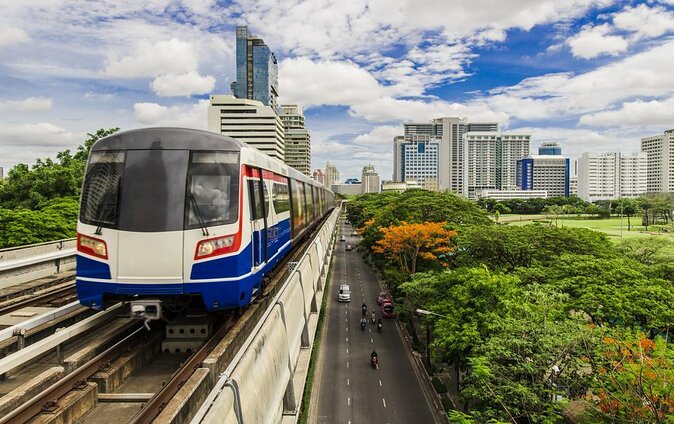
As Bangkok undergoes rapid transformation, continuously reshaping its urban landscape. The city's lively modernization, gentrification, and rapid development offer substantial opportunities for property investors.
However, navigating Bangkok's unique property standards and overcoming the language barrier can pose challenges for foreign investors. The abundance of conflicting information from various sources like online resources, property agents, developers, and fellow investors often adds to the confusion.
This guide aims to streamline the condo buying process, offering a clear and accessible roadmap for investors. It covers essential topics such as:
- Foreign Property Ownership Regulations in Thailand
- Choosing Between Resale Properties and Off-Plan Projects
- Factors to Consider During Property Search
- Preferred Locations for Property Investment in Bangkok
- Step-by-Step Guide to the Condo Buying Process
- Financing and Mortgage Options for Condo Purchases
- Overview of Ownership Costs Associated with Condo Ownership in Bangkok
- Market Research Strategies and Useful Resources
1. Foreign Property Ownership Regulations in Thailand
Thai property law regarding foreign ownership is relatively straightforward. Foreigners are permitted to own condominiums, as well as buildings or structures (separate from the land they are built on). However, direct ownership of land is prohibited for foreigners.
Condominium freehold titles, commonly referred to as condos, are the primary form of property ownership available to foreign nationals. These titles are governed by the Condominium Act B.E 1979 and subsequent amendments.
Condominium freehold titles entail the division of a building into individual units, each of which grants proportional co-ownership of common areas such as facilities, pools, gyms, and parking spaces. Foreigners are legally allowed to purchase up to 49% of the registrable area within a condominium project, while the remaining 51% must be owned by Thai nationals or entities.
In summary, foreigners seeking straightforward and hassle-free property ownership in Bangkok are encouraged to explore condominium ownership as a viable option.
2. Choosing Between Resale Properties and Off-Plan Projects
Bangkok's ever-evolving urban landscape sees residential developers continually unveiling new projects across the city, presenting homebuyers and investors with two primary options:
-
Buying Resale Properties: Purchasing resale properties on the secondary market involves acquiring completed condos from existing landlords, making them immediately available for occupancy.
Advantages:
- Price transparency: Resale properties are often publicly advertised, enabling buyers to compare prices and rental rates easily.
- Competitive pricing: Resale units typically offer better value per square meter compared to off-plan options.
Potential Disadvantages:
- Maintenance and renovation costs: Depending on the building's age and unit condition, buyers may encounter immediate expenses for upkeep and refurbishment.
-
Buying Off-Plan/New Builds: Buying off-plan entails purchasing condos directly from developers before or during construction, with a typical completion timeline of 1-3 years.
Advantages:
- Instalment payments: Buyers can pay in stages, usually 30% upon signing the contract and the remaining 70% upon completion, securing today's price for a future property.
- Newness and warranty: New builds come with a one-year developer warranty, appealing particularly to buyers who prefer brand-new properties.
Potential Disadvantages:
- Premium pricing: Off-plan projects often command higher prices per square meter compared to secondary market offerings.
- Risk of non-completion: While rare, there's a possibility of construction or financial issues leading to project delays or cancellation, although this is uncommon in Bangkok.
In summary, each option offers distinct advantages and considerations, catering to different preferences and circumstances of buyers in Bangkok's dynamic real estate market.
3. Factors to Consider During Property Search
Embarking on a property search in Bangkok can be daunting, given the vast array of condo projects available. Several key factors play pivotal roles in determining a property's appeal and potential investment success in the city:
-
Location: In Bangkok's congested urban landscape, proximity to Mass Transit Lines (BTS/MRT) is crucial. Potential investors often prioritize projects near these stations for their convenience and accessibility. Additionally, thorough research into the local neighborhood dynamics and demographics helps gauge popularity and establish appropriate rental rates and sales price ranges.
-
Condo Project and Property Specifications: Evaluating the price-to-size ratio (price per square meter) allows for comparisons within the same project and neighboring developments. Assessing factors such as layout, size, floor, and orientation is essential. Modern condos in Bangkok offer a range of amenities, and buyers should scrutinize facilities like lobbies, pools, and gyms for quality.
-
Developer and Building Management: The reputation of the developer plays a significant role in the market perception of a project. Well-known developers often enjoy greater recognition and popularity. Furthermore, established developers typically implement robust building management operations, ensuring long-term value retention. Consideration of the developer's track record and the quality of building management is advisable for prospective investors seeking reliability and sustainability.
4. Preferred Locations for Property Investment in Bangkok
The timeless adage "Location, Location, Location" holds significant weight when it comes to identifying appealing condo investments in Bangkok.
Prospective property buyers in the capital typically face a choice between the Central Business District (CBD) and Outer Bangkok.
-
Bangkok’s Central Business District (CBD): The CBD, primarily driven by the expat rental market, encompasses key neighborhoods such as Sukhumvit, Silom-Sathorn, Wireless-Ploenchit, and Rama 9-Ratchada. These areas house major office and business centers, attracting working professionals seeking a vibrant lifestyle. Luxurious amenities including upscale malls, dining establishments, and nightlife venues further enhance the allure of the CBD. However, real estate prices in these prime districts can soar, with super-luxury residences fetching prices exceeding 300,000 THB per square meter. Consequently, rental yields in Central Bangkok typically range between 2% to 4.5%.
-
Outer Bangkok: Neighborhoods beyond the CBD are classified as Outer Bangkok, offering enticing investment prospects. With developable land becoming scarce and expensive in the CBD, developers are increasingly turning their attention to non-central areas. These peripheral neighborhoods undergo modernization and gentrification due to new developments, presenting investors with opportunities for capital appreciation. Real estate in Outer Bangkok is competitively priced, with lower entry points offering higher potential for capital appreciation. Achievable rental yields in these areas range between 4.5% to 8% annually. However, some Outer Bangkok locations may lack established residential infrastructure, posing challenges for rental and resale potential. Thorough research is advised before investing in non-central areas.
In summary, while the CBD offers convenience and a vibrant lifestyle, Outer Bangkok presents investors with potential for higher returns, albeit with associated risks. Careful consideration of individual preferences and thorough due diligence is essential in navigating Bangkok's diverse property landscape.
5. Step-by-Step Guide to the Condo Buying Process
This section will simplify and outline the property buying process for foreigners in Bangkok, from the initial offer to the final transfer, in easy-to-follow steps:
Step 1: Offer and Negotiations
Once the ideal property is identified, negotiations commence. During this phase, it's crucial to agree on:
- Desired sales price.
- Share of sales taxes and transfer fees.
- Furnishing status (fully-furnished, partially-furnished, or unfurnished).
- Approximate transfer date.
Step 2: Preliminary Checks, Offer Letter, and Deposit Payment
Preliminary Checks:
- Consider hiring a lawyer for legal guidance.
- Request copies of essential documents: Chanote (Title Deed), Landlord ID or Passport, Tabien Baan (House Registration Book), and Property Agency Agreement.
Offer Letter:
- Obtain a written offer letter signed by all parties (seller, buyer, and agent).
- Specify key details such as ownership confirmation, sales price, deposit amount, tax and fee distribution, penalties for unsuccessful transfer, furnishing status, and transfer date.
Payment of Sales Deposit:
- Upon agreement, pay a deposit (typically 3-5% of the selling price) to reserve the property.
Step 3: Extra Due Diligence and Signing the Sales and Purchase Agreement
Due Diligence:
- Conduct legal due diligence, including verifying the chanote, checking for mortgages or charges, and confirming property details.
Signing the Sales and Purchase Agreement:
- Once due diligence is complete, sign the agreement to proceed with the transfer.
Step 4: Property Transfer Preparations
Document Preparation:
- Prepare all necessary documents for transfer, including calculating taxes and fees.
Buyer Overseas Money Transfer:
- Prepare documents such as original passport, marriage certificate (if applicable), spouse consent form, and cashier's cheques.
- Ensure compliance with Condominium Laws by obtaining a Foreign Exchange Transaction Form (FET) from a Thai bank, confirming the receipt of foreign currency for the purchase.
By following these steps, the property buying process for foreigners in Bangkok can be simplified and navigated with ease.